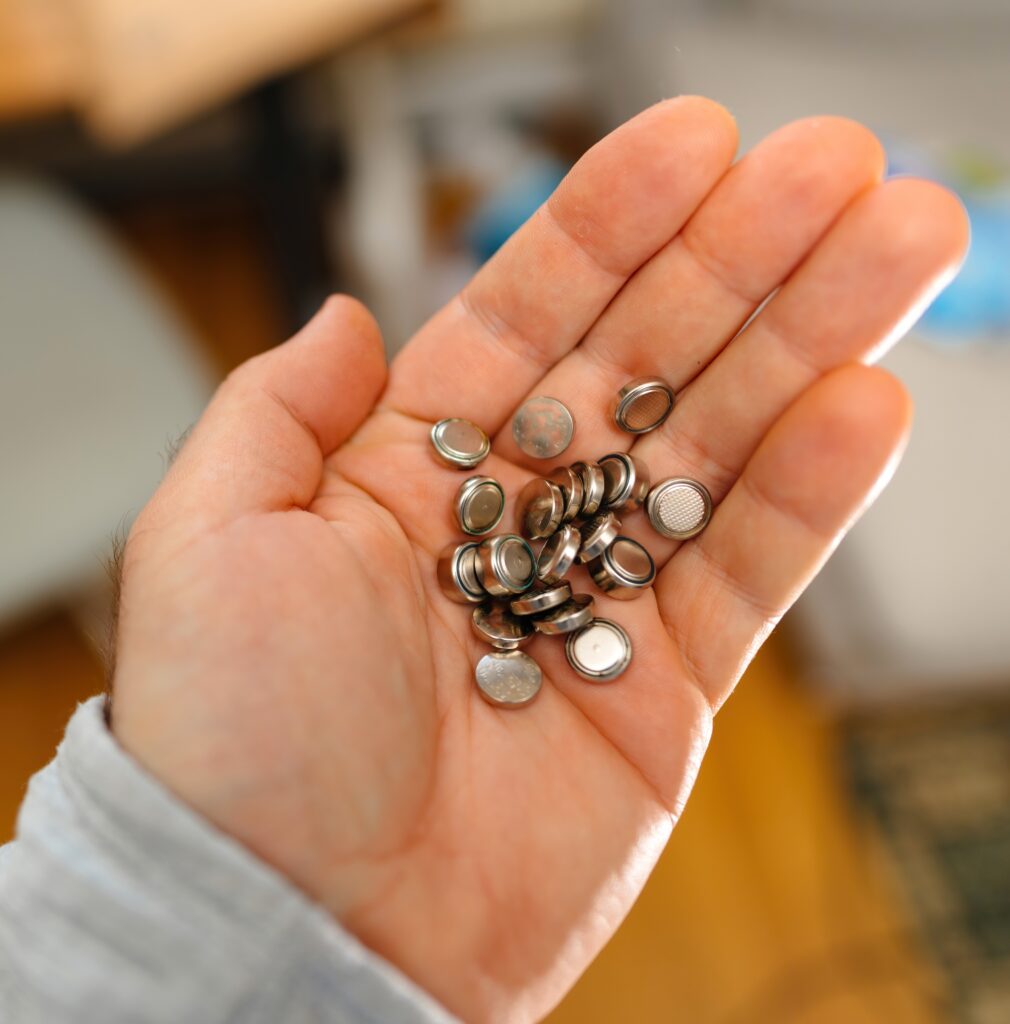
If you think a child has swallowed a button or coin battery, treat it as a medical emergency. These batteries can cause serious internal injury within hours, and a child can look fine in the meantime. Don't wait for symptoms. Call 911 or go to the nearest emergency room right away, and call the National Poison Help line at 800-222-1222 on the way or while you're being seen.
At Breit Biniazan, we represent Virginia families whose children were hurt by defective products, and we look into whether a battery compartment, a warning, or a package failed. If your child was seriously hurt, call (855) 659-4457 to talk with our team.
Why Button Batteries Can Cause Rapid Internal Injury
A button battery doesn't have to leak to cause harm. When a battery lodges in the esophagus, the child's moist tissue completes an electrical circuit, and the battery generates hydroxide, a caustic chemical, at its negative terminal. That reaction can burn through the tissue in as little as two hours. The damage can reach nearby structures such as the windpipe and major blood vessels, and the injury can keep progressing even after the battery has been removed. A child may seem well at first because the swallowing may not hurt and the battery may not block breathing right away.
Common Products That Use Button or Coin Batteries
These batteries power many everyday items:
- Remote controls: TV remotes and small keyless-entry fobs.
- Key fobs: car and garage door openers.
- Household devices: thermometers, kitchen and bathroom scales, and watches.
- Small electronics: hearing aids, calculators, and flameless candles.
- Lights and toys: light-up shoes, novelty items, greeting cards that play music, and some musical or light-up toys.
The federal rules differ by product type, so what applies to one item may not apply to another.
What to Do Immediately After a Suspected Ingestion
Speed matters more than certainty, so act on a suspicion rather than waiting to confirm. Based on current guidance from the CPSC and the National Capital Poison Center, take these steps:
- Call 911 or go to the nearest emergency room immediately
- Call the National Poison Help line at 800-222-1222 for treatment guidance, and don't wait for a call back before heading for care
- Don't induce vomiting, and don't let the child eat or drink while you wait for an evaluation unless a medical professional tells you to
- If the child is over one year old and a doctor or poison-control guidance advises it, honey may be given on the way to the hospital, but only on that professional's instruction
- Bring the device and, if you have it, the battery packaging, so the hospital can identify the battery type and size
- Make sure the child gets an X-ray, and follow the doctors' instructions for removal
- Once the emergency has passed, call Breit Biniazan at (855) 659-4457 to talk about preserving the product
Do Not Rely on the Absence of Symptoms
Symptoms can include drooling, coughing, gagging, trouble swallowing, chest or throat discomfort, vomiting, fever, and refusing to eat or drink. Many children show none of them early on, and some symptoms look like a cold or a stomach bug. A serious burn can develop before there are any obvious signs, so a lack of symptoms shouldn't stop you from seeking an evaluation.
Reese's Law Changed Federal Safety Requirements
Reese's Law was signed in August 2022 and is named for Reese Hamsmith, an 18-month-old who died after swallowing a button battery. It directed the CPSC to adopt safety rules for consumer products that use button cell or coin batteries. The CPSC's rule, which took effect in 2023, requires:
- Secure battery compartments: compartments that require a tool to open, or two independent, simultaneous hand movements.
- Testing: products must pass use-and-abuse tests, such as drop and impact testing, to confirm the battery compartment stays closed.
- Warnings: on the product, in instructions, and on the packaging.
- Child-resistant packaging: for the batteries themselves, which must meet existing federal standards.
Confirm the exact effective dates for each requirement against the CPSC's business guidance and FAQs.
Some Toys Follow a Different Federal Standard
Reese's Law has a limited exception for toy products, which are governed by the federal toy standard, ASTM F963, when they meet that standard's battery requirements. That means not every battery-powered product is subject to the same rule. Whether a particular product falls into the toy category, and which rule applies, is something to establish from the product itself.
Product Design and Warnings Matter After an Injury
When a child gets to a battery, the product's design is often at issue. The questions include:
- A compartment that opens too easily: a cover that a child can pry or slide off without a tool.
- Missing or inadequate fasteners: a screw that wasn't included, or a compartment that was never secured.
- Battery escape in foreseeable use: a battery that falls out when the device is dropped or chewed.
- Inadequate warnings: no warning, a hidden one, or one that doesn't explain the danger.
- Packaging failures: loose batteries in packaging that doesn't meet the applicable child-resistance requirements.
Preserve the Product, Battery, Packaging, and Purchase Records
The product and its records are the evidence in an injury claim. After the emergency is handled, an adult should safely keep:
- The device itself, in its current condition
- The battery, if it was removed and returned to you, stored where children can't reach it
- The packaging and instructions
- Receipts, order confirmations, and account history
- The model number, serial number, and any date code
- Photographs of the device, the open compartment, and the label
- Any recall notice or safety warning about the product
Don't repair, tape, discard, or tamper with the product.
Identify Every Company in the Product Chain
Several companies can touch a battery-powered product on its way to a family. They include the manufacturer, an importer, a distributor, the retailer, an online marketplace seller, and the maker of the battery or a component. Each has a different role, and being in the chain doesn't automatically make a company legally responsible, so we examine who designed the product, who brought it into the country, and who sold it.
A Safety-Rule Violation Does Not Automatically Decide a Virginia Injury Case
A violation of a CPSC rule is relevant, but it doesn't decide a Virginia lawsuit. Virginia doesn't recognize strict product liability, so injury claims generally go forward on negligence and breach of warranty theories. A claim has to connect a defect or a failure to warn to your child's injury, and a regulatory violation, a compliant design, and a safe product are three different things. Federal law also affects how these claims work. Under 15 U.S.C. § 2074(a), compliance with a consumer product safety rule doesn't relieve a company of liability under state law, though questions about federal preemption need case-specific review. Our work on defective consumer product claims is built on separating these questions.
Contact Breit Biniazan After a Serious Button Battery Injury
A swallowed battery can mean hospitalization, surgery, a feeding tube, or damage that lasts a lifetime. Some of these injuries involve a lasting brain injury when a child has been without oxygen, and the chemical reaction itself can cause a burn inside the body. No family should have to work out the legal side while their child is in the hospital.
When you call Breit Biniazan, we preserve the device and the battery, match the product to any recall, investigate the manufacturer, importer, and seller, and evaluate negligence and warranty claims under Virginia law. We deal with the companies and their insurers so you can stay with your child. Virginia generally gives two years from the injury to file under Va. Code § 8.01-243(A), and § 8.01-229(A) generally delays the start of that period for a minor until age 18, but a parent's own claim, including for the child's medical expenses, may not have the same extra time.
Learn more about our Virginia product liability lawyers and our practice involving defective children's products and toys.
Contact Breit Biniazan at (855) 659-4457 today to discuss your child's situation. We can't promise a result, but we can promise a careful investigation.
Button Battery Injury Frequently Asked Questions
How quickly can a swallowed button battery hurt a child?
Serious injury can start within two hours of a battery lodging in the esophagus, and tissue damage can continue after the battery is removed. That's why a suspected ingestion calls for urgent evaluation and not a wait-and-see approach.
What does Reese's Law require?
At a high level, it requires the CPSC to set standards for secure battery compartments, product testing, warnings, and child-resistant packaging for button and coin batteries. Toys that meet the federal toy standard's battery requirements are treated differently, so the rules for a specific product have to be checked individually.
Should I throw away the device after the battery is removed?
No, not if your child was injured. Once the medical emergency is handled and the household is safe, keep the device, the battery, and the packaging out of children's reach and don't alter them. They may be the most important evidence in a claim, and a lawyer can arrange for them to be stored and inspected properly.