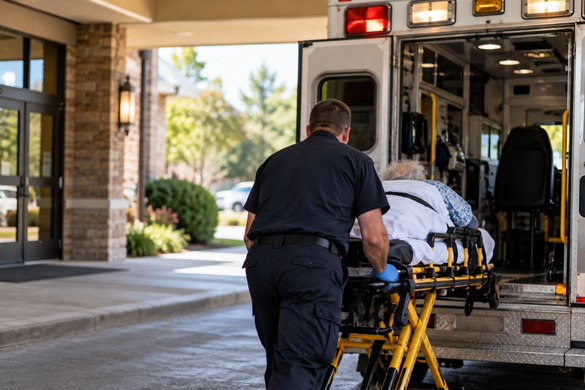
When a nursing home resident develops a serious medical problem, staff may need to do more than provide care inside the facility. A sudden change in condition can require evaluation by a doctor, emergency treatment, or transfer to a hospital.
If a nursing home failed to send your parent to the hospital and their condition became worse, you may have questions about whether staff responded appropriately. The answer often depends on what symptoms were present, when staff noticed them, what the resident's care plan and medical orders required, and what staff did in response.
When Should a Nursing Home Send a Resident to the Hospital?
Not every illness or injury requires an emergency room visit. Nursing homes routinely manage medical issues within the facility, and unnecessary hospitalization can create its own risks for older adults.
The concern is whether staff recognized a significant change in the resident's condition and took appropriate action. Depending on the circumstances, that could mean notifying a physician or other practitioner, obtaining new treatment orders, closely monitoring the resident, calling emergency medical services, or arranging a hospital transfer.
Symptoms and events that may require prompt medical assessment can include:
- Difficulty breathing or severe shortness of breath
- Signs of a stroke or heart attack
- Loss of consciousness or a major change in responsiveness
- A serious fall or suspected fracture
- Uncontrolled bleeding
- Severe or rapidly worsening infection
- Sudden confusion or a major change in mental status
- Significant changes in vital signs
- A serious adverse reaction to medication
- A rapid decline in the resident's overall condition
The presence of one of these problems does not automatically mean hospital transfer was required. The resident's diagnosis, advance directives, treatment plan, physician instructions, and overall condition can all affect the appropriate response.
What Is a Delayed Hospital Transfer From a Nursing Home?
A delayed hospital transfer occurs when a resident eventually receives hospital care, but there is a question about whether the nursing home waited too long to escalate treatment.
For example, staff might document that a resident developed worsening symptoms during the morning but not contact a medical provider until hours later. A resident may experience repeated vomiting, fever, confusion, or breathing problems while staff continue monitoring the condition without obtaining appropriate medical intervention.
The timeline matters. Families should ask when symptoms first appeared, when staff recognized the change, who was notified, what instructions were given, and when the resident was actually transferred.
A delay alone does not establish legal responsibility. The key issue is whether the response fell below the appropriate standard of care and whether that delay caused additional harm.
Can a Nursing Home Be Responsible for Failing to Transfer a Resident to the Hospital?
Potentially. Nursing homes have responsibilities related to monitoring residents and responding to significant changes in their conditions.
Federal nursing home requirements include notification obligations when certain significant changes occur. The appropriate response after that notification depends on the resident's circumstances. In some situations, the resident may be treated at the facility. In others, the condition may call for emergency or acute hospital care.
A potential claim may arise when staff fail to recognize serious symptoms, fail to communicate a change in condition, disregard medical instructions, or wait too long to obtain necessary treatment and the resident is harmed as a result.
These situations can overlap with broader forms of nursing home abuse and neglect, but the investigation should focus specifically on the medical timeline and the decisions staff made as the resident's condition changed.
What If My Parent Developed Sepsis or Another Serious Complication?
Delayed treatment can become especially concerning when an infection or another medical condition progresses while a resident remains at the facility.
A family might learn that their parent had signs of infection for hours or days before being sent to the hospital. In another case, a resident's condition may deteriorate after a fall, medication problem, wound, or period of poor food or fluid intake.
These underlying issues can connect with other forms of inadequate nursing home care, including bed sores, falls, malnutrition, or medication errors. The legal question is not simply whether the resident eventually went to the hospital. It is whether the facility responded appropriately as the warning signs developed and whether an unreasonable delay made the outcome worse.
How Can I Find Out Why the Nursing Home Waited to Call an Ambulance?
Start by building a timeline. Hospital records may tell you how sick your parent was upon arrival, but nursing home records can help show what happened beforehand.
Relevant evidence may include:
- Nursing notes and progress notes
- Vital-sign records
- Physician or practitioner notifications
- Medication administration records
- Laboratory results
- Incident reports
- Care plans
- Treatment orders
- Communications with family members
- EMS and ambulance records
- Emergency department and hospital records
Pay close attention to times. A record showing when a nurse first documented a fever, low oxygen level, change in consciousness, fall, or other symptom can be compared with the time a practitioner was contacted and the time emergency services were called.
Families should also save text messages, emails, photographs, and notes from conversations with staff. Those details can become useful when reconstructing what happened.
What Should I Do If a Nursing Home Delayed My Parent's Hospital Care?
First, make sure your parent is receiving the medical treatment they currently need. Once the immediate emergency is addressed, request and preserve records related to the incident and write down what you were told while the details are still fresh.
If you believe the nursing home failed to respond to a serious change in your parent's condition, our team can investigate the sequence of events. Breit Biniazan can review the nursing home and hospital records, examine when symptoms were recognized, and determine whether a delay in obtaining medical treatment contributed to your parent's injuries.
A nursing home may describe a hospitalization as the result of an unavoidable medical decline. The records may tell a more complete story.
Contact Breit Biniazan for a free, confidential case evaluation if your parent suffered serious harm after a nursing home delayed or failed to send them to the hospital. You pay nothing unless we win your case.