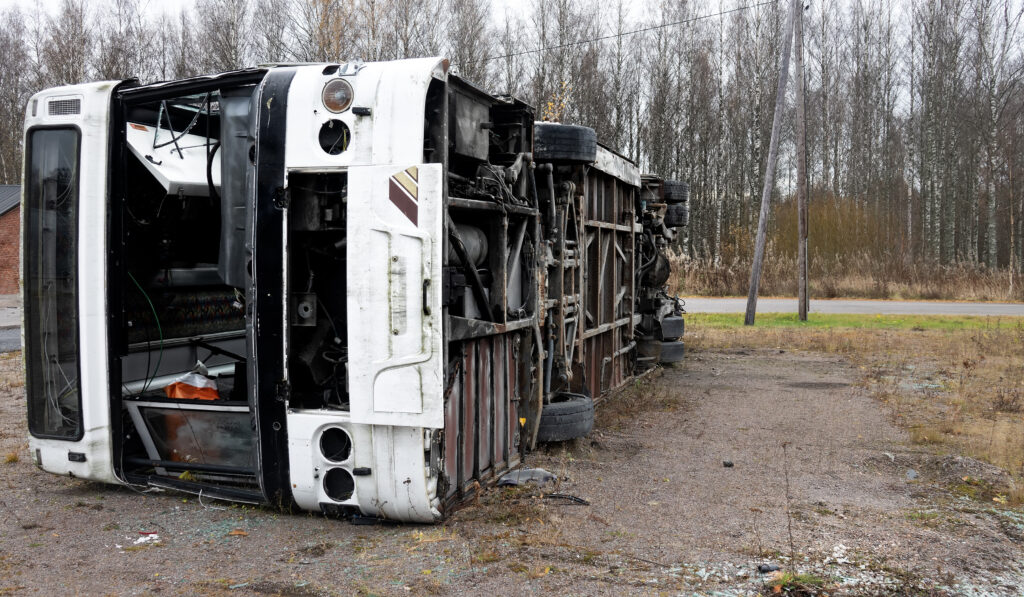
A recent bus crash on Interstate 95 in Stafford County, Virginia is a painful reminder of how quickly a highway trip can turn deadly. May 29, 2026, when a southbound motorcoach entered a traffic queue near a work zone and did not slow before striking vehicles at the end of the line. The bus then continued through the queue for about 0.44 miles, involving additional vehicles before coming to rest in the median. Five people were killed.
For the families involved, this is not just a traffic story. It is a life-changing event. Fatal crashes and serious injury crashes can leave families facing grief, trauma, medical care, missed work, and hard questions about what went wrong and who may be responsible.
What Happened In The Stafford County Bus Crash?
Based on the NTSB’s preliminary investigation, the motorcoach was a 57-passenger 2013 Van Hool C2045L operated by E&P Travel, Inc. The bus was traveling from New York City to Charlotte with a driver and 24 passengers on board. The crash took place in a 1.6-mile short-term work zone on southbound I-95 near mile marker 146.6 in Stafford County. The posted speed limit in that section of road, including the work zone, was 65 miles per hour. Weather was reported as clear and dry.
The NTSB says the bus encountered a traffic queue that had formed because of lane and shoulder closures related to overnight pavement resurfacing. It then struck vehicles at the end of that queue. One passenger in a Chevrolet and all four occupants of an Acura were fatally injured. Other people in the involved vehicles suffered injuries ranging from minor to serious.
That factual picture matters because it helps show this was not just a random event. It happened in a setting where drivers had to respond to changing traffic conditions in and near a work zone.
Why Speed Matters Even When The Posted Limit Seems High
Speeding is not only about driving above the number on a sign. The National Highway Traffic Safety Administration explains that speed can still be dangerous when a driver is going too fast for the conditions, including when a road is under repair or traffic patterns have changed. That point is important here.
On a clear highway at night, a posted limit may look normal. But when traffic is stopped or slowing ahead because of a work zone, the real safe speed may be much lower. A driver who fails to adjust can run out of time and distance to stop.
The Federal Highway Administration’s work zone safety guidance makes the same point in practical terms. Drivers are told to obey posted work zone speed limits, look out for stopped or slow traffic, and maintain a safe following distance to reduce the risk of crashes.
In other words, highway speed and work zone conditions can become a deadly combination when drivers do not slow in time.
Why Bus Accidents Are Often So Severe
A bus crash is different from an ordinary fender-bender. Large passenger vehicles bring a different level of force, different stopping needs, and often a larger number of injured people. The Federal Motor Carrier Safety Administration tracks fatal, injury, and property-damage-only crashes involving buses and large trucks using national crash data systems.
That size and weight matter. When a bus crashes into smaller passenger vehicles, the people in those cars often take the worst of the impact. In a multi-vehicle highway crash, the danger can spread fast, especially when a bus continues moving through a queue of traffic, as the NTSB says happened in this case.
Bus crashes can also create a second layer of harm for bus passengers themselves. Sudden force, roll movement, interior impacts, and secondary collisions can leave riders with head injuries, spinal trauma, broken bones, and other serious injuries.
Work Zones Demand More From Drivers
Work zones are not normal driving environments. Lanes can narrow. Traffic can back up without much warning. Signage may change through the night. Drivers may also be more tired during overnight hours, which can slow reaction time and decision-making.
Federal highway safety guidance has long warned that speeding through work zones increases crash risk. Work zones can frustrate drivers and change how they respond behind the wheel, but that does not make high-speed driving safe.
This Stafford County crash appears to show exactly why that warning matters. The NTSB says the traffic queue formed because of lane and shoulder closures in an overnight resurfacing project. When traffic compresses and a large commercial vehicle does not slow in time, the result can be catastrophic.
Who May Be Investigating A Virginia Bus Crash Like This?
Serious bus crashes often bring in multiple agencies. In this case, the NTSB has opened a highway investigation and identified the Virginia State Police, VDOT, and FMCSA as parties to that investigation.
Each agency looks at a different piece of the picture. State police may handle immediate crash response and criminal investigation. The NTSB focuses on transportation safety and cause analysis. FMCSA is tied to commercial vehicle safety oversight. VDOT may have information about roadway conditions, traffic management, and the work zone itself.
That layered review matters to families because a major bus crash may involve questions that do not exist in a simple two-car collision. A case may involve the driver, the bus company, maintenance records, hiring or training issues, work zone conditions, or other third parties depending on the facts.
The Human Cost Of A Preventable Highway Crash
The hardest part of a story like this is not the roadway diagram or the crash report. It is the human loss behind the headlines. Five people lost their lives in this crash. Dozens more were hurt.
For survivors, the damage can last long after the road reopens. A high-speed multi-vehicle crash can leave people with traumatic brain injuries, orthopedic injuries, chronic pain, emotional trauma, and long recoveries. Some may not be able to return to work for weeks or months. Some may never get back to the life they had before.
What This Virginia Bus Accident May Teach Drivers
This recent Virginia crash highlights a few plain truths.
First, highway driving is not safe just because the weather is good. The NTSB’s preliminary page says conditions were clear and dry, yet the crash was still deadly.
Second, work zones change what safe driving looks like. A posted speed is not a free pass to keep moving at that pace when traffic is stopped or compressed ahead. Federal safety agencies make clear that drivers must adjust for conditions.
Third, large commercial vehicles can turn a single mistake into a mass-casualty event. A bus carries force, momentum, and passengers, which raises the stakes for everyone nearby.
And fourth, these crashes deserve serious investigation. When people are killed or badly hurt, families should not be left guessing about what happened.
Why Commercial Bus Crash Cases Can Be More Complicated Than Other Wrecks
A crash involving a commercial bus is often more complex than a typical passenger vehicle accident. That is because there may be more evidence to review and more parties involved. In a serious bus accident, investigators may look at driver actions, company policies, vehicle maintenance, route planning, scheduling pressure, training records, and roadway conditions. In some cases, the facts may show that the crash was caused by more than one failure.
That matters for families because the full picture does not always appear in the first news report. Early coverage may describe the crash in broad terms, but it may take much longer to understand why the bus did not slow down, whether the driver had enough warning, whether the company had a strong safety record, and whether there were other issues that may have played a role. In a devastating multi-vehicle crash, those details can make a major difference.
Evidence Can Matter A Great Deal After A Serious Bus Accident
In a major Virginia bus crash, evidence may come from many places. That can include crash scene photographs, police reports, vehicle damage, witness statements, roadwork records, surveillance footage, dispatch communications, and commercial vehicle records. In some cases, electronic data may also help show speed, braking, or other driving behavior in the moments before impact.
The sooner these facts are reviewed, the better chance there may be to preserve useful information. In commercial vehicle cases, records are not always kept forever. That does not mean every case will turn on a single document or data point, but it does mean early attention can matter.
For injured people and grieving families, this part of the process can feel cold and technical. But it is often one of the only ways to move from confusion to clarity. When a crash leaves behind life-changing injuries or fatal losses, families deserve a clear understanding of what happened and whether it could have been prevented.
The Impact Of A Bus Crash Can Last Long After The Headlines Fade
News coverage tends to focus on the day of the crash. Families live with the effects much longer. Some survivors may face surgeries, rehabilitation, chronic pain, or emotional trauma that lasts for months or years. Others may be unable to return to work or care for their household the way they once did. In fatal cases, surviving family members may be left to carry both emotional loss and financial strain at the same time.
That is why these cases are about more than a single highway event. They are about the lasting impact on real people. When a bus crash causes catastrophic harm, the road to recovery may be long and uncertain. Families often need not only answers, but also support as they try to rebuild their lives.
Speak With A Virginia Bus Accident Lawyer
A serious bus crash can leave families with grief, medical bills, lost income, and more questions than answers. If you or someone you love was hurt in a Virginia bus accident, our team at Breit Biniazan may be able to help you understand what comes next. Contact us today to learn more.
FAQs About The Recent Virginia Bus Accident
What Happened In The Recent Virginia Bus Accident On I-95?
According to the NTSB, the crash happened on May 29, 2026, in Stafford County, Virginia, when a southbound motorcoach entered a traffic queue near a work zone and did not slow before colliding with vehicles at the end of that queue. The bus continued through the line of traffic for about 0.44 miles before stopping. Five people were killed.
Did Speed Play A Role In The Stafford County Bus Crash?
The NTSB’s preliminary page says the motorcoach did not slow as it approached the traffic queue. More broadly, NHTSA says speed can be dangerous not only when a driver exceeds the posted limit, but also when the driver is traveling too fast for road conditions, including roads under repair.
Who Can Be Held Responsible In A Virginia Bus Accident?
That depends on the facts. In some cases, responsibility may involve the bus driver, the company operating the bus, maintenance providers, or other parties connected to the crash. Cases involving commercial vehicles often require a detailed investigation into driver conduct, company safety practices, and roadway conditions.