Autonomous and automated vehicles are already part of everyday traffic. Some assist human drivers while others operate with little or no direct human control. When one of these vehicles is involved in a collision, the usual assumptions about fault often break down.
Instead of focusing only on driver behavior, these cases often require a closer look at how the technology worked, what it detected, and whether a human was realistically expected to intervene. That added layer is what makes autonomous vehicle accident claims more complex than standard car accidents.
If you believe your injuries stemmed from an accident with an autonomous vehicle, reach out to Breit Biniazan at (855) 659-4457 today.
What Counts as an Autonomous or Automated Vehicle?
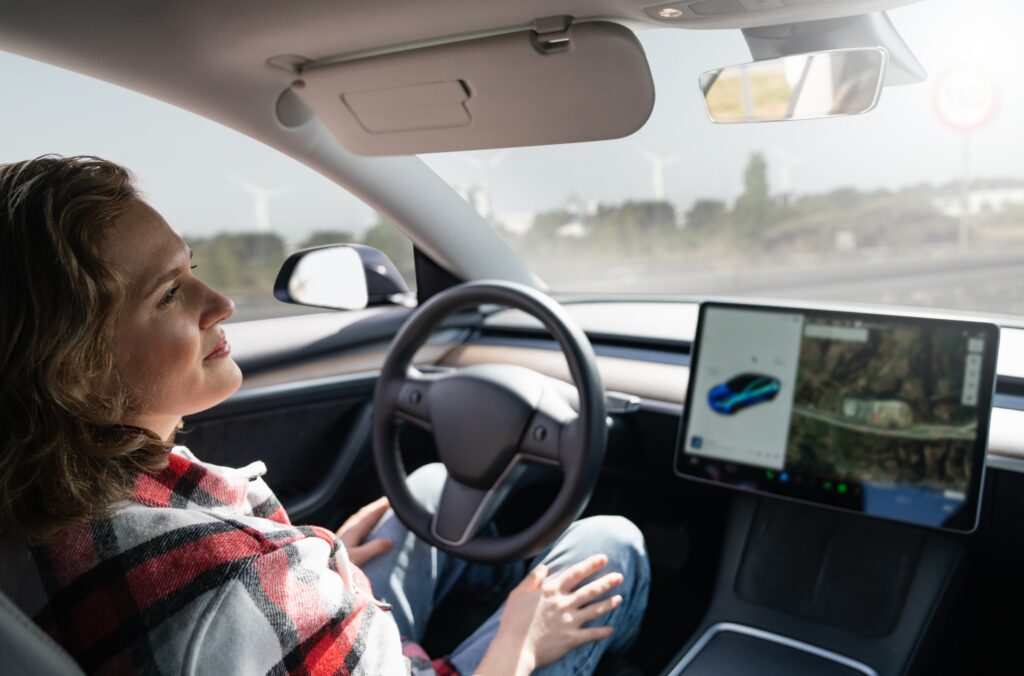
Not every vehicle described as “self-driving” operates the same way. Automation exists on a spectrum, and that distinction matters after a crash.
Some vehicles assist drivers with speed, braking, or lane control. Others operate in autonomous modes where the system makes most driving decisions. Fully autonomous vehicles may not have a human driver at all and are often operated by companies rather than individuals.
The level of automation affects who is expected to act, who is monitoring the system, and who may be legally responsible when something goes wrong.
How Responsibility is Evaluated After An Autonomous Vehicle Crash
Responsibility in an autonomous vehicle collision is rarely limited to one person or company. In some crashes, a driver is still expected to supervise the system. In others, the focus shifts toward the companies that designed, tested, or deployed the technology.
These cases often involve shared responsibility. Sorting that out means looking at human behavior and system performance together, rather than treating the crash as a simple driving mistake.
When Drivers May Still Be Liable for the Crash
Some automated systems still rely on human oversight. If alerts were given and a driver failed to respond, that can factor into liability. This issue comes up most often in crashes involving driver-assist technology rather than fully autonomous vehicles.
Some crashes have little to do with driver behavior. Instead, they raise questions about how the vehicle or its systems were built. Product liability issues may involve:
- System designs that struggle in everyday driving conditions
- Sensors that fail to reliably detect pedestrians or cyclists
- Delayed braking or steering responses
- Software updates that change how the vehicle behaves
In these situations, responsibility may shift toward manufacturers or technology companies when the system does not perform safely in real-world use.
The Role of Software and Vehicle Data
Automated vehicles rely heavily on software to interpret their surroundings and decide how to respond. That software is designed to control detection, timing, and decision-making.
After a crash, vehicle data can help show what the system detected, how it reacted, and whether warnings were issued. This type of evidence often plays a central role in autonomous vehicle cases and does not exist in traditional accident claims.
Fully Autonomous Vehicles and Company-Operated Fleets
Some autonomous vehicles are owned and operated by companies rather than individuals. These vehicles may operate without a human driver at all.
Crashes involving company-operated fleets raise different questions about system testing, deployment decisions, remote monitoring, and maintenance practices. Claims involving companies like Waymo often focus on operational choices rather than individual driving behavior.
Why Autonomous Vehicle Accident Claims Are Handled Differently
Autonomous vehicle cases often involve:
- Multiple responsible parties
- Technical evidence beyond witness statements
- Questions about system limits and design choices
- Early resistance from insurers and manufacturers
How Breit Biniazan Approaches Autonomous Vehicle Cases
At Breit Biniazan, autonomous vehicle accident cases are handled with the reality of modern technology in mind. These claims often involve serious injuries, complex systems, and companies that move quickly to protect themselves.
With over $2 billion recovered, the firm has experience handling cases that require careful investigation and the resources to challenge manufacturers and operators when automated systems fail to keep people safe.
Whether a crash involves driver-assist technology, a fully autonomous vehicle, or a potential product defect, the focus stays on what the technology did and who should be held responsible when it didn’t work the way it should. Give us a call today at (855) 659-4457 to get started on your claim.