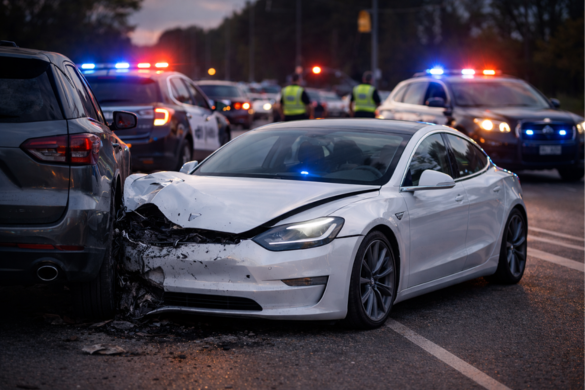
Self-driving technology is no longer experimental on Virginia roads. Vehicles equipped with autopilot and driver-assist systems are now part of daily traffic, from Northern Virginia highways to local streets across the state. When these systems fail or are misused, serious accidents can follow.
Virginia self-driving car accidents often involve more than driver error. They raise questions about vehicle design, software behavior, and how much responsibility should fall on manufacturers when automation plays a role in a crash. At Breit Biniazan, our personal injury attorneys are well-versed in handling both traditional car accidents and self-driving car accidents. If you’ve been injured in an accident with a self-driving car, call us at (855) 659-4457 to discuss your potential claim.
Self-Driving Cars and Autopilot Technology on Virginia Roads
Advanced driver-assist systems are designed to help drivers, not replace them. Still, many crashes happen when these systems behave unexpectedly or when drivers trust them more than they should.
Autopilot and self-driving features are now used during highway travel, stop-and-go traffic, lane changes, and navigation. On Virginia roads, where congestion, construction zones, and sudden traffic shifts are common, even small system errors can lead to major collisions.
How Autopilot and Driver-Assist Systems Contribute to Accidents
Not every self-driving car accident looks the same. In many cases, vehicle data becomes a key part of understanding what went wrong.
Common Autopilot-Related Crash Scenarios in Virginia
- Failure to recognize stopped traffic on highways
- Inability to detect pedestrians or cyclists at intersections
- Sudden braking in flowing traffic
- Drifting out of lanes during curves or merges
- Delayed response in construction or reduced-lane areas
These issues are especially concerning on busy Virginia corridors like I-95, I-66, and I-64, where traffic patterns change quickly.
Virginia Laws and Responsibility in Self-Driving Car Accidents
Virginia does not treat self-driving car accidents like ordinary collisions. When automation is involved, responsibility may extend beyond the driver.
Liability may depend on whether the driver was actively supervising the vehicle, whether the system performed as advertised, and whether known risks were properly communicated. In many cases, fault may be shared with other drivers, the manufacturer, or the software designer.
Virginia accident claims involving autopilot systems often require technical analysis, thorough review, and careful handling of vehicle data before clear answers emerge.
Injuries Commonly Seen in Virginia Self-Driving Car Crashes
Self-driving car accidents frequently involve high speeds or sudden stops, which increases the risk of serious injury. Many people walk away from the scene feeling shaken but mostly fine, only to experience symptoms days later.
Brain and Head Injuries
Concussions and other brain injuries are common in autopilot-related crashes, especially during rear-end or high-speed impacts. Symptoms may affect work, sleep, and daily function long after the crash.
Neck, Back, and Spine Injuries
Whiplash, herniated discs, and spinal injuries often appear in crashes involving sudden braking or loss of control. These injuries can limit mobility and require extended treatment.
Orthopedic and Internal Injuries
Broken bones, joint injuries, and internal trauma are also reported in Virginia self-driving car accidents, particularly when vehicles collide at highway speeds.
Accidents Involving Pedestrians and Other Drivers
Self-driving car accidents in Virginia do not only affect those inside the vehicle. Pedestrians, cyclists, and occupants of other cars are often injured when a vehicle fails to detect its surroundings or respond in time.
Urban areas, crosswalks, parking lots, and residential neighborhoods present challenges for automated systems. When a pedestrian or cyclist is struck, the consequences are often severe and life changing.
What to Do After a Self-Driving Car Accident in Virginia
Taking the right steps after a self-driving car accident helps protect both health and legal rights. These cases move quickly once manufacturers and insurers become involved.
- Get medical care right away, even if injuries seem mild
- Document the scene, vehicle damage, and road conditions
- Preserve the vehicle and any onboard data
- Avoid assumptions about what caused the crash
Self-Driving Car Accident Claims and Lawsuits in Virginia
Claims involving autopilot and self-driving systems often involve aggressive defense strategies. Manufacturers and insurers may argue that the driver failed to pay attention or misused the system.
Virginia injury claims tied to self-driving technology may seek compensation for medical expenses, lost income, ongoing treatment, and the long-term impact of injuries. These cases are rarely resolved without a personal injury firm prepared to push back.
A Trial-Driven Approach to Virginia Self-Driving Car Cases
Cases involving automated vehicles demand more than surface-level investigation. They require preparation, technical understanding, and a willingness to challenge powerful companies.
The attorneys at Breit Biniazan approach self-driving car accident cases with one principle in mind: Never settle for less. Every case is prepared as if it will go before a jury, with the goal of securing full recovery for injured clients.
Talk With Breit Biniazan About Your Virginia Self-Driving Car Accident
If you were injured in a Virginia self-driving car or autopilot-related accident, your case deserves focused attention and serious advocacy.
Breit Biniazan provides elite representation for injury victims facing complex accident claims involving advanced vehicle technology. The firm is committed to accountability, preparation, and results.
Contact Breit Biniazan today to take the first step toward justice and the recovery you deserve.