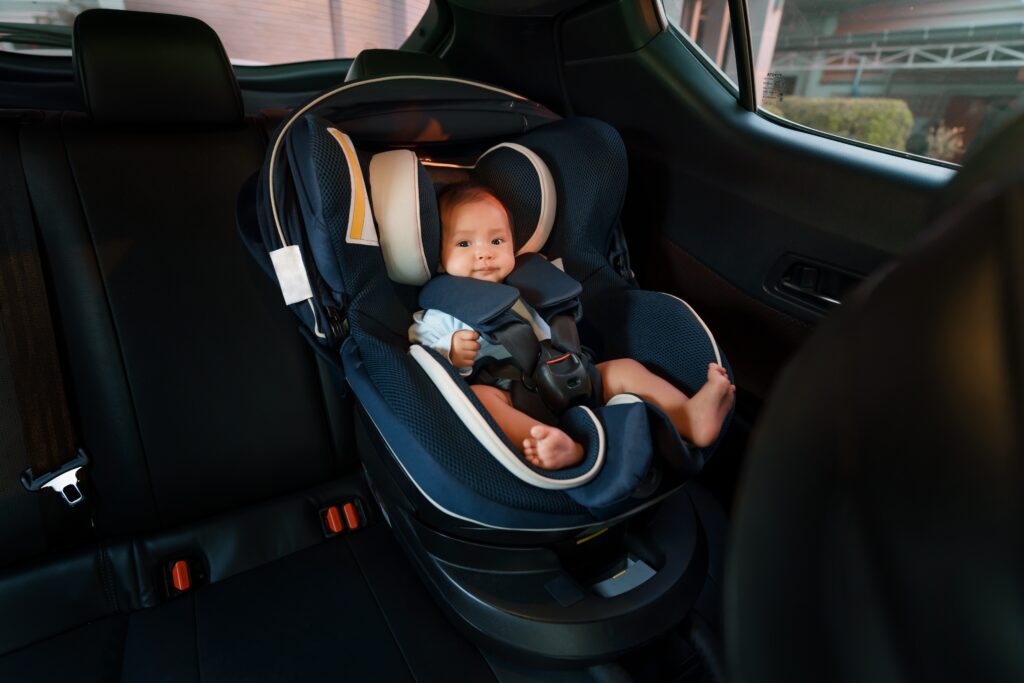
Parents trust car seats to protect their children during a crash. They read the instructions, tighten the straps, and make sure the seat fits their child. When a car seat breaks, comes loose, or fails to provide the protection it promised, the results can be devastating.
A defective child car seat injury claim may allow a family to hold a manufacturer, seller, or another company responsible for putting a dangerous product into the hands of parents.
At Breit Biniazan, we understand that an injured child is not just a case file. This is your son, daughter, grandchild, or loved one. Your family may be facing medical visits, fear about the future, and questions no parent should have to answer alone.
Our team represents victims and families harmed by defective consumer products. We investigate what went wrong, preserve evidence, and fight to hold responsible companies accountable.
What Is a Defective Child Car Seat Injury Claim?
A defective child car seat injury claim is a type of product liability case. It may arise when a car seat contains a dangerous defect and that defect causes or adds to a child’s injuries.
Car seat defects may involve:
- The design of the seat
- An error during manufacturing or assembly
- Weak or broken materials
- Missing or unclear warnings
- Faulty installation instructions
- A buckle, harness, base, or anchor that fails
- A recalled product that remains in use or on store shelves
A child may be injured during a car crash even when the parent or caregiver followed the manufacturer’s instructions. In some cases, the crash begins the investigation, but the car seat’s failure causes injuries that would otherwise have been less severe.
The legal questions often include whether the seat was unreasonably dangerous, whether the company knew or should have known about the danger, and whether the defect played a role in the child’s harm.
How Can a Child Car Seat Be Defective?
A car seat can look normal and still contain a serious safety problem. Some defects are hidden inside the seat, buckle, base, or restraint system. Others become clear only when the seat is placed under the force of a crash.
Defective Car Seat Design
A design defect may affect every car seat made from the same plans. The seat may have been assembled exactly as intended, but the design itself may not provide reasonable protection.
Examples may include:
- A base that disconnects under pressure
- A shell that cracks or bends during impact
- A harness that does not keep a child in place
- Poor side-impact protection
- Padding that shifts away from the child
- A chest clip that opens during a crash
- A headrest that moves out of position
Federal safety rules establish testing and performance requirements for child restraint systems. These standards include requirements related to frontal impact testing and other aspects of car seat performance.
Meeting a minimum safety standard does not necessarily answer every question in a product liability case. A car seat may still contain a dangerous defect, or a company may have failed to respond properly to known complaints or test results.
Manufacturing And Assembly Defects
A manufacturing defect occurs when a specific seat or group of seats differs from the intended design.
A factory may use the wrong part, fail to secure a bolt, install a buckle incorrectly, or produce plastic that is weaker than required. Damage can also occur during packaging, shipping, or storage.
These cases may require a close inspection of the damaged seat and a comparison with seats from the same model and production run.
Defective Buckles, Harnesses, And Chest Clips
A child depends on the harness system to stay positioned in the seat. If a buckle releases, a strap tears, or a chest clip breaks, the child may be thrown forward or partly ejected.
Other possible problems include:
- Straps that loosen on their own
- Harness adjusters that slip
- Buckles that will not latch
- Buckles that cannot be opened after a crash
- Webbing that tears or stretches too far
- Clips that move away from the proper position
A buckle problem can also delay a child’s removal from a vehicle after a collision, fire, or other emergency.
Defective Bases And LATCH Connections
Infant car seats often connect to a separate base. Other seats may use lower anchors and tethers to attach to the vehicle.
A defective base may release during a crash. A broken connector may separate from the anchor. An indicator may wrongly show that the seat is locked into place.
A parent may believe the seat is secure because it clicks, locks, or displays a green marker. If that signal is wrong, the defect may remain hidden until the seat is placed under pressure.
Missing Warnings Or Confusing Instructions
Even a strong car seat can become dangerous when its instructions are unclear.
Manufacturers have a duty to provide reasonable instructions and warnings about how their products should be installed and used. A warning defect may involve:
- Missing height or weight limits
- Unclear recline instructions
- Poorly marked belt paths
- Confusing rear-facing or forward-facing directions
- Missing warnings about incompatible vehicles
- Failure to explain how to secure the top tether
- Instructions that are difficult to understand
Inadequate instructions can lead to improper installation even when a parent makes a careful effort to use the seat correctly.
Injuries Caused By Defective Car Seats
A child’s body is still developing. The force of a crash can cause serious harm, especially when a restraint system does not work as intended.
Possible injuries include:
- Traumatic brain injuries
- Skull fractures
- Spinal cord damage
- Neck and back injuries
- Internal bleeding
- Broken bones
- Facial injuries and scarring
- Nerve damage
- Organ damage
- Emotional trauma
- Fatal injuries
Some symptoms may be clear right away. Others may appear over time as a child grows, returns to school, or struggles with movement, speech, memory, or behavior.
Families dealing with a head injury can learn more about our work involving brain injuries. We also represent victims living with severe spinal cord injuries and other catastrophic harm.
The Long-Term Effect On A Child And Family
A serious injury can affect every part of a child’s life. The child may need surgery, therapy, mobility support, classroom help, or care that continues into adulthood.
Parents may miss work to attend appointments or provide daily care. Brothers and sisters may also struggle as the family’s routine, finances, and future plans change.
These losses go far beyond the first hospital bill. A claim may need to account for the child’s future medical needs, education, independence, emotional health, and ability to work later in life.
Who May Be Responsible For A Defective Car Seat?
More than one company may share responsibility for a dangerous car seat. Identifying each responsible party can require a review of how the seat was designed, tested, made, labeled, shipped, and sold.
Potentially responsible parties may include:
The Car Seat Manufacturer
The manufacturer may be responsible when the product was poorly designed, improperly made, inadequately tested, or sold without reasonable warnings.
Internal records may show whether the company received similar complaints, discovered failures during testing, or delayed action after learning about a possible danger.
A Component Manufacturer
Car seats contain many separate parts. Buckles, harnesses, clips, foam, plastic shells, metal frames, and anchor connectors may be made by outside suppliers.
A component company may bear responsibility when one of its parts fails and causes injury.
A Distributor Or Retailer
A distributor or seller may have played a role in placing the dangerous product into the stream of commerce. Questions may also arise when a company continues selling a recalled seat, stores it improperly, or markets a counterfeit product as a compliant child restraint.
Another Driver Or Vehicle Manufacturer
A defective car seat case may exist alongside a claim involving the driver who caused the collision.
In some cases, a defective vehicle part may also have contributed to the harm. A failed seat belt, seatback, door, airbag, or anchor system can affect how the child seat performs.
Our team handles complex motor vehicle accident claims as well as product liability cases. We can examine each part of the event rather than assuming there was only one cause.
What Evidence May Be Important In A Car Seat Defect Case?
Evidence can disappear quickly after a collision. A damaged car seat may be thrown away, returned to the store, surrendered to an insurance company, or altered during an attempted repair.
Preserving the actual seat is often one of the most important parts of an investigation.
Other useful evidence may include:
- The car seat, base, padding, straps, and broken pieces
- The product box and instruction manual
- Purchase receipts and order records
- The model number and manufacture date
- Registration cards
- Recall notices
- Photos and videos from before and after the crash
- The damaged vehicle
- Medical records
- Police and crash reports
- Witness statements
- Emails or messages with the manufacturer
- Prior consumer complaints
- Design, testing, and manufacturing records
The seat should generally be kept in its post-crash condition so qualified professionals can inspect it. Families should be cautious about returning it, repairing it, or giving it to an insurance representative before speaking with an attorney.
What If The Car Seat Was Recalled?
A recall can be an important part of a defective child car seat injury claim, but it does not automatically prove or disprove a case.
The National Highway Traffic Safety Administration maintains a database for vehicle equipment and car seat recalls. NHTSA explains that recalls may be issued when a manufacturer or the agency finds that a product creates an unreasonable safety risk or fails to meet minimum safety standards. The available remedy may include a repair, replacement, or refund.
A recall investigation may help answer questions such as:
- What defect was discovered?
- Which models and production dates were affected?
- When did the manufacturer first learn about the problem?
- Were consumers warned in a timely way?
- Did the proposed repair address the danger?
- Were similar injuries or complaints reported?
A claim may still be possible when no recall has been announced. A family’s report may be among the first signs that a seat has a wider safety problem.
What If The Car Seat Was Installed Incorrectly?
Manufacturers and insurance companies may argue that the parent installed the seat incorrectly. That claim deserves careful review rather than an automatic assumption that the family caused the failure.
Installation problems may result from:
- Confusing instructions
- Poor product labels
- A misleading lock indicator
- Defective attachment hardware
- A base that appears secure but is not
- Incompatibility that was not clearly disclosed
- A retailer’s improper demonstration or installation
Virginia law requires children up to age eight to be properly secured in a child restraint device that meets federal standards. It also requires qualifying child restraint devices to be placed in the back seat, with a limited exception for vehicles that do not have a back seat.
The same Virginia statute states that a violation of its child restraint requirements cannot be treated as negligence, used to reduce damages, or admitted as evidence in a civil action for damages.
Every case depends on its facts. The condition of the seat, the instructions, the vehicle, witness statements, and technical inspections may all be important.
Compensation In A Defective Child Car Seat Injury Claim
A product liability claim may seek compensation for the full effect of the child’s injuries. The available damages depend on the facts, medical evidence, and applicable law.
Recoverable losses may include:
- Emergency treatment and hospital care
- Surgeries and rehabilitation
- Future medical expenses
- Physical, occupational, or speech therapy
- Assistive devices
- Home or vehicle modifications
- Pain and suffering
- Emotional distress
- Permanent disability or disfigurement
- Reduced future earning ability
- Caregiving and support needs
A family may also have a wrongful death claim involving a defective product when a car seat failure leads to a child’s death.
No amount of money can undo what happened. A civil claim may, however, help a family address financial needs and demand accountability from the companies responsible for a dangerous product.
How Long Do Families Have To File A Claim In Virginia?
Virginia generally requires personal injury actions to be filed within two years after the claim accrues. Different rules, exceptions, or tolling provisions may apply when the injured person is a child or when other special circumstances are present.
Deadlines can be complicated in cases involving children. Different claims may also belong to the child and the child’s parents or guardians.
Families do not have to understand every filing rule before reaching out. Speaking with an attorney early may give the legal team more time to preserve the seat, inspect the vehicle, locate witnesses, and request records before evidence is lost.
How Breit Biniazan Investigates Defective Car Seat Cases
Car seat cases often involve both a serious crash investigation and a detailed product investigation.
Our team may examine:
How The Crash Happened
We review the force, direction, and sequence of the collision. This may include vehicle damage, road evidence, event data, police reports, photos, and witness accounts.
How The Car Seat Performed
We examine whether the seat stayed attached, whether the shell remained intact, and whether the harness kept the child in the correct position.
How The Product Was Designed And Made
We may seek design documents, test results, quality-control records, consumer complaints, recall materials, and communications involving the manufacturer and its suppliers.
How The Injury Occurred
Medical records and crash evidence may help show how the child moved during impact and whether the failed restraint caused or worsened the injuries.
Breit Biniazan handles claims involving defective children’s products and toys, dangerous consumer goods, vehicle crashes, and life-changing injuries. We prepare each case based on the evidence and the human story behind it.
Talk With Our Defective Child Car Seat Injury Lawyers
When a product meant to protect your child fails, it can leave your family feeling angry, afraid, and unsure where to turn.
You deserve straight answers. You also deserve a legal team that will listen to what happened and take your child’s future seriously.
Breit Biniazan may be able to help investigate the car seat, identify responsible companies, and fight for accountability. Contact our team at (855) 659-4457 to request a consultation.