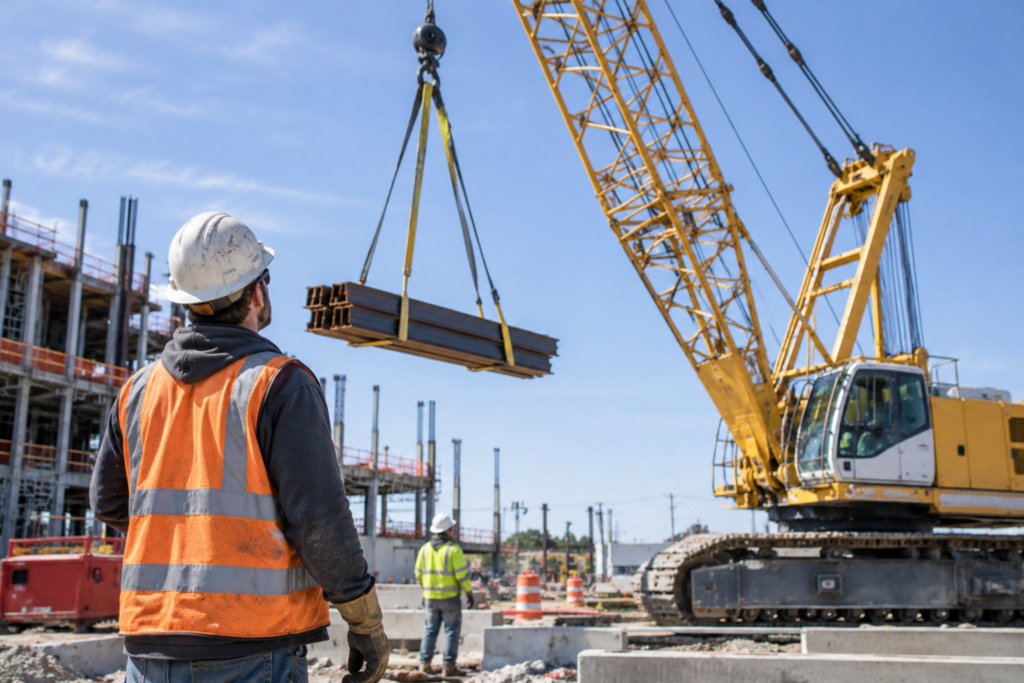
Crane accidents can cause serious injuries in seconds. A falling load, collapsing boom, or equipment failure can leave workers with permanent disabilities, years of medical treatment, or injuries they never fully recover from. These accidents happen on construction sites, at ports and shipyards, and in industrial facilities where heavy materials are lifted and moved.
At Breit Biniazan Trial Lawyers, we represent people seriously injured by dangerous equipment, unsafe working conditions, and negligence throughout Virginia. Our firm has recovered more than $2 billion in verdicts and settlements, including major results in maritime and product liability cases. We take on companies responsible for serious injuries and fight for compensation that covers what our clients have lost and what they may need in the future.
Types of Crane Accidents That Can Lead to Injury Lawsuits
Crane accidents happen for many reasons, from poor planning and operator mistakes to defective equipment and unsafe lifting practices. Some involve a crane falling over, while others happen when a suspended load swings into a worker or drops without warning.
Common crane accidents include:
- Crane collapses and tip-overs: Tower cranes, mobile cranes, and crawler cranes can collapse or overturn because of unstable ground, overloading, improper assembly, or structural failures.
- Struck-by crane and falling load accidents: Workers and bystanders can be hit by falling materials, swinging loads, crane booms, or unsecured cargo.
- Crane-related falls: Operators, riggers, and maintenance workers can fall from access ladders, platforms, crane structures, and elevated work areas.
- Shipyard and port crane accidents: Container cranes, gantry cranes, and cargo-handling equipment can seriously injure longshore workers, dockworkers, and vessel crews.
- Crane equipment failures: Faulty brakes, damaged cables, hydraulic failures, and defective hoists can cause loads to drop or equipment to move unexpectedly.
These accidents can involve tower cranes, overhead cranes, mobile cranes, and other lifting equipment used in construction, shipping, manufacturing, and industrial work. From construction projects in Richmond and Arlington to industrial facilities and waterfront operations across Virginia, crane accidents can put workers and people nearby at serious risk.
Who Is Responsible for a Crane Accident?
Crane accident claims often involve several companies working on the same jobsite. One company may own the crane, another may operate it, and a separate contractor may be responsible for inspections, maintenance, or site safety. When something goes wrong, more than one party may be responsible.
Depending on what caused the accident, a claim may involve:
- Crane operators and subcontractors who ignore load limits, use unsafe lifting methods, or fail to follow safety procedures.
- General contractors and site managers who fail to address dangerous ground conditions, poor site coordination, or other hazards under their control.
- Crane owners and rental companies that supply unsafe equipment or fail to maintain it properly.
- Equipment manufacturers that produce defective cranes, hoists, brakes, cables, or other lifting components.
- Rigging and maintenance companies whose mistakes lead to dropped loads, equipment failures, or crane instability.
Workers' compensation may cover certain expenses after an on-the-job injury, but it may not be the only option. When a contractor, equipment manufacturer, or another company outside the employer is responsible, an injured worker may also have a third-party injury claim.
Serious Injuries Caused by Crane Accidents
A crane doesn't have to collapse to cause a life-changing injury. A swinging load can crush someone against a wall, a falling steel beam can cause permanent brain damage, and a worker who falls from a crane platform may never walk again. Even workers who survive these accidents may face years of treatment and rehabilitation.
Common injuries include traumatic brain injuries, spinal cord injuries, paralysis, amputations, crushed limbs, broken bones, and internal organ damage. Some workers never return to their jobs, while others need ongoing medical care or help with everyday activities. When a crane accident is fatal, surviving family members may be able to file a wrongful death lawsuit.
How Breit Biniazan Investigates Crane Accidents
After a serious crane accident, equipment may be removed, repaired, or put back into service. That can make it harder to determine what caused the injury. Our attorneys work to preserve evidence and investigate the companies and equipment involved.
A crane accident investigation may include:
- Reviewing crane inspection and maintenance records
- Examining load charts, lift plans, and equipment specifications
- Looking into operator training and qualifications
- Investigating rigging failures and unsafe lifting practices
- Reviewing photographs, video footage, and witness statements
- Working with engineers and equipment safety experts when needed
Our attorneys have handled complex construction, maritime, and defective equipment cases. We know what to look for when investigating equipment failures, unsafe lifting practices, and workplace accidents.
Crane Accidents at Shipyards, Ports, and Maritime Facilities
Ports and shipyards use some of the largest cranes in operation. In coastal Virginia, including Portsmouth and Virginia Beach, cranes are used to move shipping containers, vessel components, and heavy cargo. When a container falls, a crane malfunctions, or cargo shifts during loading, workers nearby can suffer serious injuries.
Breit Biniazan has handled serious maritime injury cases involving dangerous working conditions, defective equipment, and accidents aboard vessels. Attorney Jeffrey Breit also served on the Plaintiffs' Steering Committee following the Deepwater Horizon disaster and has worked with experts in marine safety, rigging, and crane operations.
Workers injured at ports and shipyards may have claims under the Longshore and Harbor Workers' Compensation Act, the Jones Act, or other laws, depending on their jobs and where the accident happened. Our attorneys examine which laws apply and whether a negligent contractor, vessel owner, or equipment company may be held responsible.
Compensation for Crane Accident Injuries
A serious crane accident can leave someone unable to work while medical bills continue to grow. Some injuries require multiple surgeries, long-term rehabilitation, or permanent care. For families who lose a loved one, the financial impact can last for years.
Depending on the claim, compensation may cover medical expenses, lost wages, reduced earning ability, future treatment, pain and suffering, and permanent disabilities. Families pursuing fatal crane accident claims may also be able to recover funeral expenses, lost financial support, and other damages allowed by law.
What you can recover depends on how the accident happened, who was responsible, and which laws apply. Workers injured on construction sites may have different legal options than those hurt at ports or shipyards.
Speak With Breit Biniazan's Crane Accident Lawyers
Breit Biniazan Trial Lawyers has recovered more than $2 billion for clients and has experience taking on major companies in serious injury, maritime, and product liability cases. We handle complex claims involving dangerous equipment, catastrophic injuries, and families who have lost loved ones because of negligence.
If you or someone in your family was seriously injured in a crane accident in Virginia, call Breit Biniazan for a free consultation. We'll review what happened, look into who may be responsible, and discuss how our firm can help you pursue compensation.