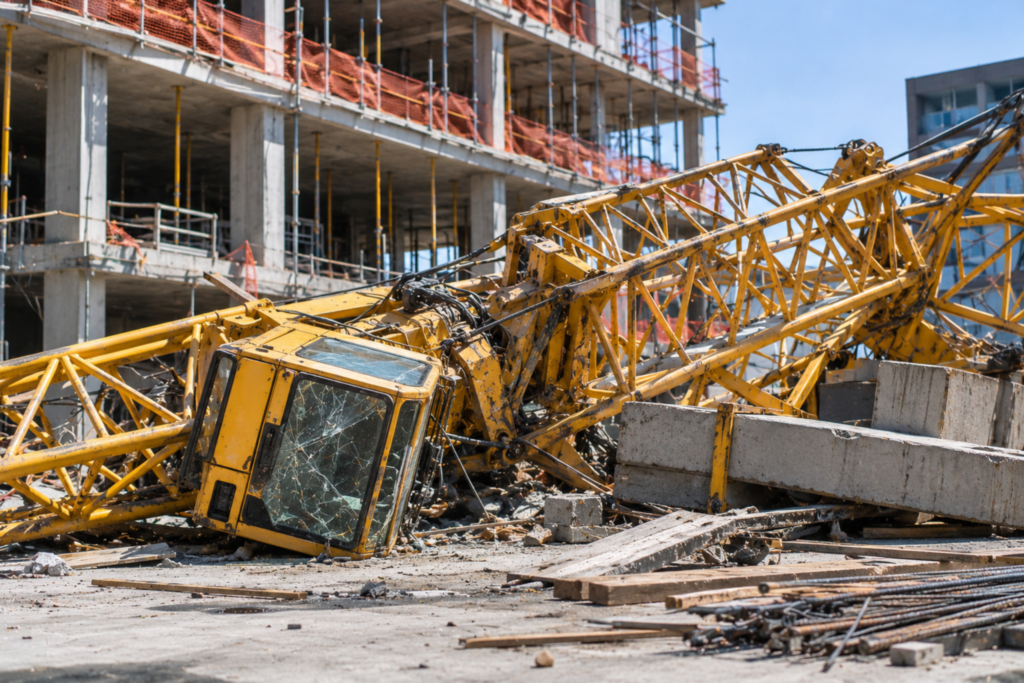
When a crane collapses, workers on the ground and inside the equipment have little time to get out of the way. A tower crane can buckle during a lift, a mobile crane can overturn, or a boom can fail and bring thousands of pounds of equipment crashing down. These accidents can leave workers with permanent injuries or families facing the loss of someone they depend on.
At Breit Biniazan Trial Lawyers, we represent people injured in serious construction, industrial, and equipment-related accidents throughout Virginia. Our attorneys have handled cases involving dangerous machinery, workplace fatalities, and negligent crane operations. We investigate what caused the collapse, who was responsible, and what it will take to recover the losses caused by the accident.
What Causes a Crane to Collapse or Tip Over?
Crane collapses can happen when equipment is pushed beyond its limits, set up incorrectly, or operated on ground that cannot support its weight. In some cases, the crane itself has a defect that causes it to fail during normal operations.
Common causes of crane collapses include:
- Overloading: Attempting to lift more weight than the crane can safely handle, including lifts that exceed its rated capacity at a particular boom angle or radius.
- Unstable ground or improper setup: Soft soil, uneven surfaces, inadequate outrigger support, or poorly prepared ground can cause a crane to tip over.
- Improper assembly or dismantling: Missing connections, incorrect assembly procedures, or mistakes during tower crane erection and removal can lead to structural failure.
- Boom and structural failures: Damaged boom sections, failed welds, worn components, or other crane equipment defects can cause parts of the crane to buckle or break.
- Unsafe lifting operations: Sudden load movement, improper rigging, poor communication, or lifting without an adequate plan can make a crane unstable.
- High winds and weather conditions: Operating in winds beyond safe limits or failing to secure equipment during severe weather can contribute to a collapse.
A crane may appear stable before a lift begins, but its balance can change as the boom extends, the load moves, or the working radius increases. Determining why it fell often requires examining both the equipment and the decisions made before the accident.
Tower Crane, Mobile Crane, and Crawler Crane Collapse Accidents
Different cranes have different failure risks. Tower cranes used on large construction projects in Richmond and Arlington rely on proper assembly, secure foundations, and careful load management. A failure involving the mast, jib, counterweights, or supporting structure can cause large sections of the crane to fall onto workers, nearby buildings, or public areas.
Mobile and truck-mounted cranes can overturn when outriggers are improperly positioned or the ground gives way beneath them. Crawler cranes can also lose stability during heavy lifts, especially on poorly prepared surfaces or when loads exceed safe operating limits. These failures can happen at construction sites, industrial plants, and waterfront facilities throughout Virginia.
Who Can Be Held Responsible for a Crane Collapse?
A crane collapse may involve mistakes by several companies. The crane operator might be employed by one contractor, the equipment may belong to a rental company, and another business may have prepared the ground or assembled the crane.
Depending on what happened, responsible parties may include:
- General contractors and site managers who fail to address unsafe ground conditions, lifting hazards, or worksite coordination problems.
- Crane operators and subcontractors who overload equipment, ignore operating limits, or use unsafe lifting procedures.
- Crane owners and rental companies that provide poorly maintained or unsafe equipment.
- Assembly and dismantling contractors whose mistakes leave the crane structurally unstable.
- Manufacturers and component suppliers responsible for defective booms, structural connections, hydraulic systems, or other parts.
Virginia workers injured in a crane collapse may qualify for workers' compensation benefits. They may also have a separate lawsuit against a negligent third party, depending on that party's role and the applicable law. Our attorneys examine the relationships between contractors, equipment owners, and manufacturers to identify who can be held responsible.
Serious Injuries and Fatalities Caused by Crane Collapses
When a crane overturns or collapses, workers may be trapped beneath equipment, crushed by falling sections, or struck by heavy materials. Crane operators can also suffer severe injuries inside the cab as the equipment falls.
These accidents can cause traumatic brain injuries, spinal cord damage, paralysis, amputations, severe crush injuries, internal bleeding, and multiple fractures. Many survivors need extensive surgery and rehabilitation, while others are left with permanent disabilities that prevent them from returning to work.
Fatal crane collapses can leave families without their primary source of income. When negligence causes a death, surviving family members may be able to pursue a wrongful death claim for financial losses and other damages allowed under Virginia law.
Breit Biniazan's Experience With Crane Accidents and Workplace Fatalities
Breit Biniazan has experience handling serious injuries involving industrial equipment and crane operations. In one wrongful death case involving a crane operation error at a paper manufacturing plant, a $4.7 million result was obtained, with attorney Justin Sheldon serving as co-counsel.
Our firm's work also includes major maritime injury and defective equipment cases. Jeffrey Breit has handled complex maritime litigation, including the Deepwater Horizon disaster, and has worked with experts in rigging, crane operations, marine engineering, and workplace safety.
That experience matters when a crane collapse involves several contractors, complicated machinery, or companies disputing who caused the accident. We look at the equipment, the work being performed, and the decisions that led to the failure.
Investigating Why a Crane Collapsed
After a crane collapse, companies may begin clearing the site, removing damaged equipment, or making repairs. Those changes can make it harder to determine why the crane failed. Our attorneys work to preserve evidence and examine the conditions that existed before the accident.
An investigation may involve reviewing lift plans, load charts, crane inspection reports, maintenance records, operator qualifications, assembly instructions, ground conditions, and photographs or video of the collapse. Engineers and crane safety experts may also examine damaged components to determine whether the failure involved overloading, improper setup, structural defects, or unsafe operation.
Crane Collapses at Virginia Ports, Shipyards, and Industrial Sites
Crane collapses aren't limited to building construction. Ports, shipyards, manufacturing plants, and industrial facilities use cranes to lift containers, steel, machinery, and heavy vessel components. In coastal Virginia, including Portsmouth and Virginia Beach, crane operations are part of ship repair, cargo handling, and other waterfront work.
When a crane collapses at a port or shipyard, the injured worker's legal rights may differ from those of someone injured at a construction site. Depending on their job and where the accident occurred, maritime workers may have claims involving the Longshore and Harbor Workers' Compensation Act, the Jones Act, or negligence by another company.
Breit Biniazan's maritime accident attorneys have handled serious vessel and workplace injury cases, including accidents involving dangerous equipment and unsafe working conditions.
Compensation for Crane Collapse Injuries
A crane collapse can leave an injured worker facing months in the hospital, multiple surgeries, and a permanent loss of income. Some people need lifelong medical care, mobility equipment, or changes to their homes because of their injuries.
In a personal injury lawsuit, compensation may include medical bills, future treatment, lost wages, reduced earning capacity, pain and suffering, and permanent disability. Families who lose someone in a fatal crane collapse may also have claims for lost financial support, funeral expenses, and other losses.
What you can recover depends on how the collapse happened, who was responsible, and which laws apply. Our attorneys pursue claims against negligent companies and equipment manufacturers when the evidence supports holding them accountable.
Speak With Breit Biniazan's Virginia Crane Collapse Lawyers
Breit Biniazan Trial Lawyers represents workers and families dealing with serious injuries and wrongful deaths throughout Virginia, including Richmond, Arlington, Portsmouth, and Virginia Beach. Our attorneys have experience taking on major companies in complex workplace injury, maritime, and defective equipment cases.
If you or a loved one was injured in a crane collapse or tip-over accident, call Breit Biniazan for a free consultation. We'll review what happened, investigate the companies involved, and discuss how our firm can help you pursue compensation.