A crane doesn't have to collapse to cause a serious injury. A suspended load can swing into a worker, a steel beam can fall during a lift, or a moving crane boom can strike someone standing nearby. With the weight of the equipment and materials involved, these accidents often cause crushing injuries, permanent disabilities, or death.
At Breit Biniazan Trial Lawyers, we represent workers, pedestrians, and families affected by serious crane and heavy equipment accidents across Virginia. Our attorneys have handled cases involving crane operation errors, dangerous machinery, and fatal workplace injuries. We investigate how the accident happened, who was responsible for the lift, and whether unsafe work practices or equipment failures played a role.
Common Struck-by Crane and Falling Load Accidents
Workers can be struck by cranes or suspended materials during loading, unloading, lifting, and equipment movement. People walking or working near a jobsite may also be injured when materials move outside the designated work area.
Common accidents include:
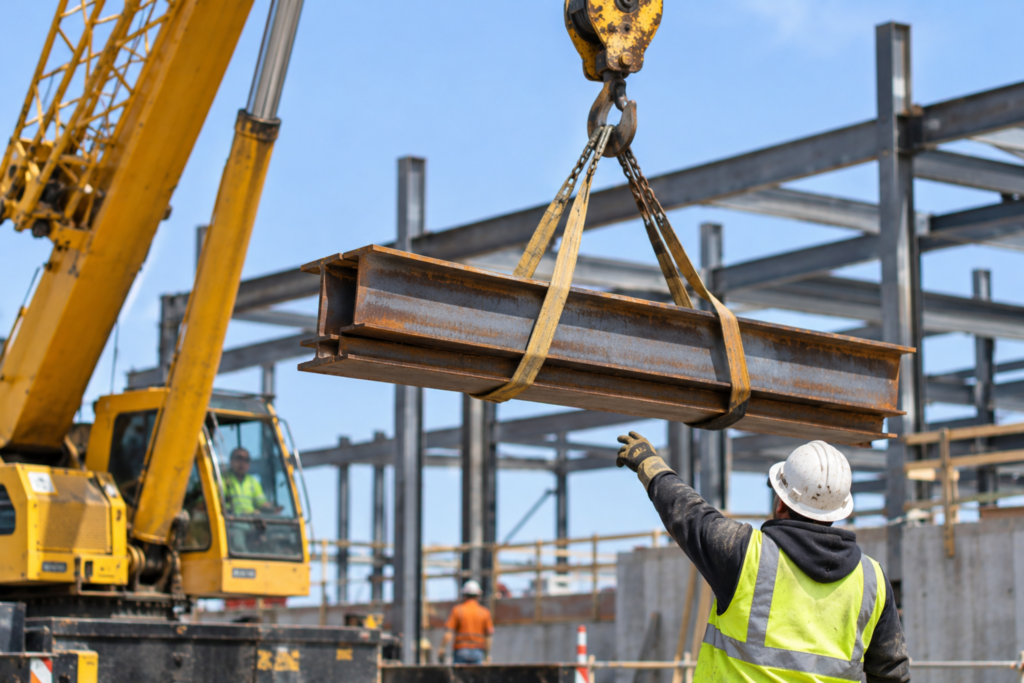
- Falling crane loads: Steel beams, concrete panels, pipes, machinery, and other materials can fall when rigging fails or a load becomes unsecured.
- Swinging loads: Suspended materials can swing unexpectedly and strike workers, pinning them against nearby equipment, structures, or vehicles.
- Crane boom strikes: A moving boom, jib, or other crane component can hit workers or pedestrians during lifting and repositioning.
- Dropped shipping containers: Container cranes and other cargo-handling equipment can release or drop heavy containers during port operations.
- Improperly secured materials: Loads that shift, separate, or fall during a lift can injure workers even when the crane itself is operating normally.
- Crane movement accidents: Workers may be struck by rotating upper structures, moving crane components, or equipment operating in crowded work areas.
These incidents differ from crane collapse accidents, where the crane itself overturns or structurally fails. In a struck-by accident, the crane may remain standing while the load or moving equipment causes the injury.
Why Do Crane Loads Fall or Swing Into Workers?
A falling load accident can start with something as simple as an incorrectly attached sling or a worker standing where the operator cannot see them. Other incidents involve failed lifting equipment, poor communication, or materials that were never properly secured.
Some of the most common causes include improper rigging, damaged wire ropes, failed hooks or lifting attachments, overloaded equipment, sudden load movement, and inadequate communication between crane operators and signalpersons.
Unsafe lifting areas are another concern. Workers should not be placed beneath suspended loads or in areas where moving equipment can strike them. When contractors fail to control access, coordinate lifting operations, or address known hazards, people outside the lifting crew can also be injured.
Who Is Liable When a Crane Strikes a Worker or Pedestrian?
Responsibility for a struck-by crane accident often goes beyond the person operating the equipment. A contractor may direct the lift, another company may supply the rigging, and a separate business may own or maintain the crane. The investigation needs to establish who controlled the work and what caused the load or equipment to strike someone.
Depending on the accident, a claim may involve:
- Crane operators and lifting contractors who move loads without adequate clearance, ignore signals, or use unsafe lifting methods.
- General contractors and site managers who fail to keep workers and pedestrians away from dangerous lifting operations.
- Rigging companies and subcontractors that improperly attach, balance, or secure heavy materials.
- Crane owners and maintenance companies that allow damaged or poorly maintained equipment to remain in use.
- Equipment manufacturers whose defective hooks, hoists, cables, or other lifting components contribute to a falling load.
In Virginia, an injured employee may qualify for workers' compensation, but a separate lawsuit may be possible when a legally responsible third party caused the accident. Pedestrians and other bystanders may also have personal injury claims against negligent companies or individuals. Our attorneys review the worksite responsibilities, equipment records, and available evidence to determine who may be held accountable.
Serious Injuries From Falling Crane Loads and Boom Strikes
Being struck by a suspended load can cause far more damage than an ordinary workplace injury. Heavy materials can crush limbs, fracture the skull, damage the spine, or pin someone against another object. Even a smaller load can cause devastating injuries when it falls from a significant height.
Victims may suffer traumatic brain injuries, spinal cord damage, paralysis, amputations, severe fractures, internal bleeding, and permanent nerve damage. Some people require multiple surgeries or lifelong medical care, while others are unable to return to physically demanding work.
When a falling load or crane strike results in death, surviving family members may have grounds to pursue a wrongful death claim against those responsible.
Breit Biniazan's Experience With Crane Operations and Serious Workplace Injuries
Breit Biniazan has handled serious injury and wrongful death cases involving dangerous equipment and industrial operations. In one case, a crane operation error at a paper manufacturing plant resulted in a worker's death. Attorney Justin Sheldon served as co-counsel in the case, which resulted in a $4.7 million settlement.
Our firm also has extensive experience in maritime accident litigation. Jeffrey Breit has worked with experts in rigging, crane operations, marine engineering, and workplace safety. That background is particularly relevant when a worker is injured by improperly secured cargo, a failed lift, or dangerous equipment at a port or shipyard.
Our attorneys investigate what went wrong and pursue claims against the companies responsible for serious injuries and fatalities.
Falling Load and Cargo Accidents at Virginia Ports and Shipyards
At ports and shipyards, cranes lift shipping containers, heavy machinery, vessel components, and other cargo. Workers may be injured when a container swings into a loading area, a lifting attachment fails, or unsecured materials fall onto the dock or vessel.
These risks are especially relevant to waterfront operations in Portsmouth and Virginia Beach, where cargo handling, ship repair, and industrial lifting are part of the maritime industry. Similar struck-by hazards exist at construction sites in Richmond and Arlington, where cranes move steel, concrete, and building materials above active work areas.
For injured longshore workers, dockworkers, and vessel crews, the laws governing a claim may differ from those covering a typical construction accident. Our maritime workplace injury attorneys examine whether the Longshore and Harbor Workers' Compensation Act, the Jones Act, or other laws apply, along with any potential claims against negligent third parties.
Evidence That Can Help Prove a Falling Load Accident Claim
After a crane accident, damaged rigging may be discarded, equipment may be repaired, and work may resume before anyone has fully investigated what happened. Preserving the right evidence can help show whether the load was properly secured and whether the lifting operation was safe.
Our attorneys may examine lift plans, rigging inspection records, load weights, equipment maintenance histories, operator qualifications, witness accounts, and available surveillance or jobsite video. We also look at who directed the lift, where workers were positioned, and whether proper warning signals and restricted areas were in place.
Compensation for Workers and Bystanders Struck by Cranes
A serious struck-by injury can leave someone unable to work, facing large medical bills, or needing ongoing treatment. In a personal injury lawsuit, compensation may include medical expenses, future care, lost wages, reduced earning capacity, pain and suffering, and permanent disability.
Families who lose a loved one may also be able to recover funeral expenses, lost financial support, and other damages available under the applicable law. The amount and types of compensation depend on the accident, the responsible parties, and the claims that can be brought.
Speak With Breit Biniazan
Breit Biniazan Trial Lawyers represents seriously injured workers and families throughout Virginia, including Richmond, Arlington, Portsmouth, and Virginia Beach. Our attorneys have taken on major companies in complex injury, maritime, and wrongful death cases, and our firm has recovered more than $2 billion in verdicts and settlements.
If you or a loved one was struck by a crane, falling load, or moving equipment, call Breit Biniazan for a free consultation. We'll review the accident, investigate who was responsible, and discuss how our firm can help you pursue compensation.